Skin Prick Test for Allergies: What It Is, How It Works, and What to Expect
If you sneeze for weeks without a cold, your eyes itch every spring, or a rash keeps coming back for no clear reason, the real problem may be an allergy you have never identified. Tablets can calm the symptoms for a day, but they cannot tell you what is causing them. That is where allergy testing comes in, and the most common first test is the skin prick test.
What is a skin prick test?
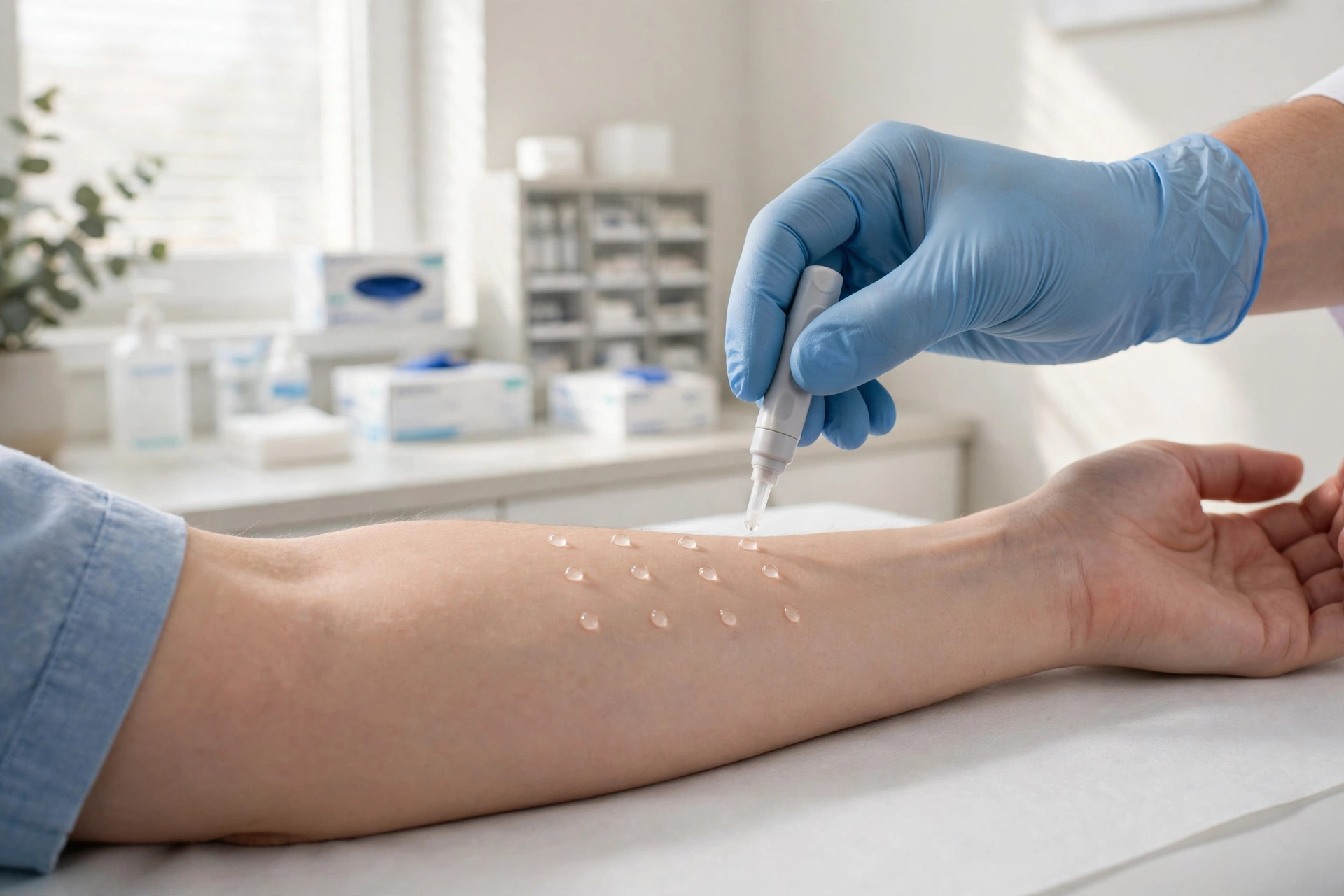
A skin prick test is a simple, quick way to find out which substances your body reacts to. Small drops of suspected allergens are placed on the skin, usually on the forearm, and the surface is lightly pricked so that a tiny amount enters just under the surface. It is not an injection and it does not draw blood.
The whole appointment is usually short. The test itself takes only a few minutes, and results are read after about 15 to 20 minutes, so most people leave with answers on the same day.
Which allergies can it detect?
The test is mainly used for airborne allergens — the things you breathe in every day. These include house dust mites, pollens, moulds, cockroach particles, and animal dander from cats and dogs. These are the usual suspects behind sneezing, a runny or blocked nose, itchy eyes, and recurring sinus trouble.
In Islamabad, dust and pollen are especially common triggers, and symptoms often get worse in spring or during dusty, dry weather. A test helps separate a true allergy from a cold or sinus infection, which can look similar but need different treatment.
How to prepare for the test
Preparation matters, because some medicines can hide the skin’s reaction and make the result unreliable. The most important rule is to stop oral antihistamines and other anti-allergy medicines for at least five days before the test, unless the doctor who asked for the test tells you otherwise. Our allergy tablet guide explains the common anti-allergy medicines used in Pakistan.
Do not stop any long-term medicine, such as asthma inhalers, on your own — ask the clinic first. Wear a short-sleeved shirt on the day, and tell staff about any skin condition or recent severe reaction.
What happens during the test, step by step
First, a nurse cleans a small area of your forearm. Then a multi-pronged applicator, dipped in different allergen solutions, is pressed lightly against the skin. Each prick corresponds to one suspected allergen, and the positions are marked so the staff know which reaction belongs to which substance.
Most people are surprised by how mild it feels. It is usually described as a light scratch rather than pain, and there is no bleeding. After the pricks, you simply wait for 15 to 20 minutes without scratching or rubbing the area while the skin reacts.
How the results are read
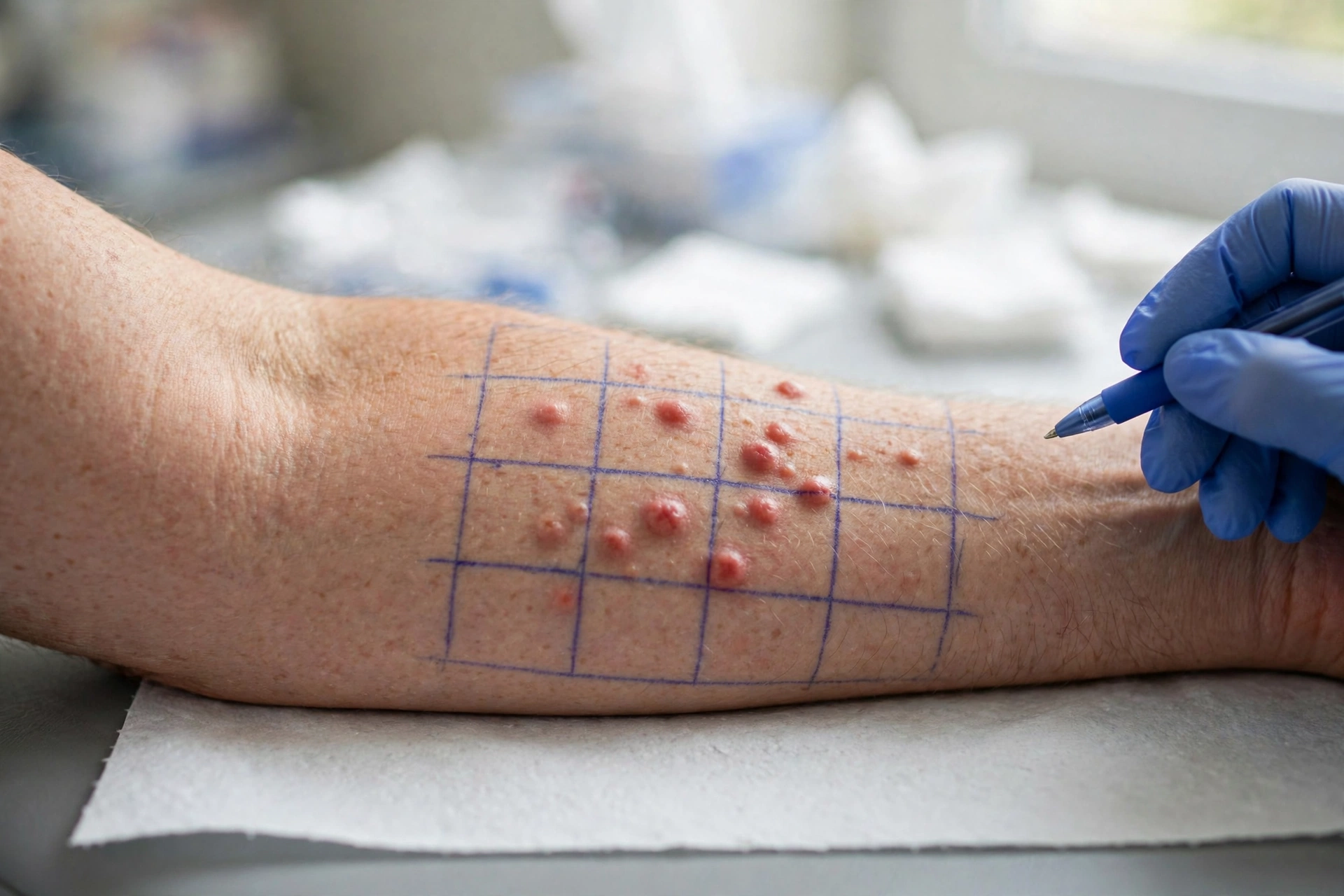
Where the body reacts, the skin swells into a small itchy bump, similar to a mosquito bite. Doctors call this bump a wheal, and its size gives a rough idea of how strong the reaction is. A larger wheal generally means a stronger sensitivity, though the result is always read together with your symptoms and medical history — a positive bump alone is not the whole diagnosis. Reactions usually fade within a few hours.
Why does the skin react at all?
The reaction is your immune system at work. In an allergic person, the body has already made antibodies, called immunoglobulin E (IgE), against a harmless substance such as pollen. When that substance enters the skin during the test, IgE triggers the release of histamine, which causes swelling, redness, and itching. That bump is a small, controlled version of what happens in your nose or lungs during an allergy attack.
What happens after the test?
A skin prick test is only the first step. Once your triggers are known, the clinic can build a personal management plan: avoiding your triggers where possible, medicines to control symptoms, and, for suitable patients, immunotherapy — a long-term treatment that gradually trains the immune system to tolerate the allergen. It takes months to years, so it is a decision to discuss carefully with the allergy team. See our fees guide for what a first visit generally costs.
Is the test safe?
For most people, the skin prick test is considered safe, with side effects limited to temporary itching and redness at the test sites. Serious reactions are rare, which is why the test is done in a clinic where staff can respond immediately if needed.
The test may need to be postponed if you have widespread eczema on the test area, cannot stop antihistamines, or have had a severe allergic reaction in the past.
Frequently asked questions
Does the skin prick test hurt?
Most people feel only a light scratch. There is no needle going deep into the skin and no bleeding.
How long does it take?
The pricking takes a few minutes, plus a 15 to 20 minute wait — usually under an hour in total.
Do I need to stop my allergy tablets before the test?
Yes, oral antihistamines should normally be stopped at least five days beforehand, or results may come back falsely negative. Confirm the exact plan with the clinic.
The bottom line
If allergies are spoiling your sleep, work, or your child’s school days, guessing the trigger wastes time and money. A skin prick test replaces guesswork with answers, and those answers make long-term treatment possible. Check the center’s timings and our appointment guide, then contact the clinic to confirm preparation instructions and availability. The center is located at NIH Road, Chak Shahzad — see our location page for directions.
Disclaimer: This article is for general information only and is not a substitute for medical advice. Test preparation, suitability, and treatment decisions should always be confirmed with a qualified doctor.